
History
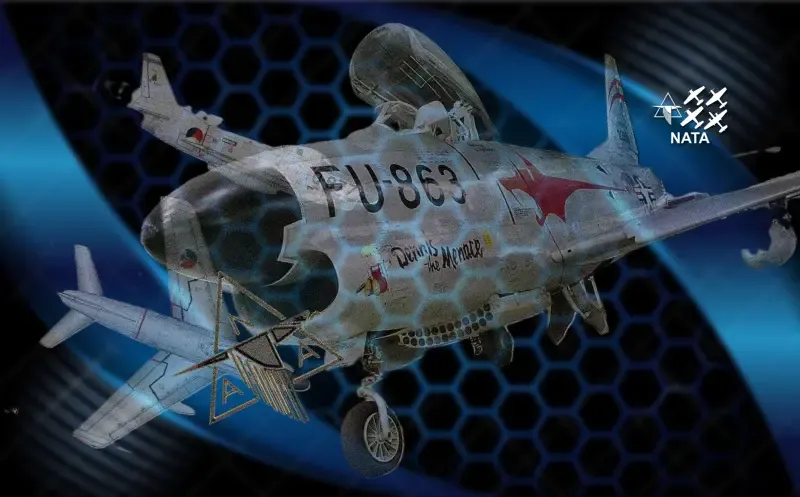
The North American F-86D/K/L Sabre (initially known as the YF-95 and widely known informally as the “Sabre Dog“)[2][3] is an American transonic jet interceptor. While the original North American F-86 Sabre was conceived as a day fighter, the F-86D was specifically developed as an all-weather interceptor for the United States Air Force in the late 1940s. Originally designated as the YF-95 during development and testing, it was re-designated the F-86D before production began, despite only sharing 25% commonality of parts with the original F-86. Production models of the F-86D/K/L differed from other Sabres in that they had a larger fuselage, a larger afterburning engine, and a distinctive nose radome. The most-produced Sabre Dog variants (the “D” and “G” models) also mounted no guns, unlike the Sabre with its six M3 Browning .50 caliber machine guns, instead mounting unguided Folding-Fin Aerial Rocket (FFAR) “Mighty Mouse” rockets. The “K” and “L” Sabre Dog variants mounted four 20mm M24A1 cannon.[4]
Design and development

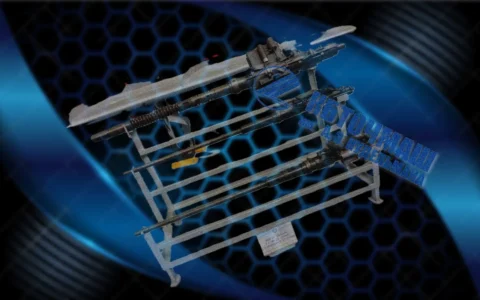
The YF-95 was a development of the F-86 Sabre, the first aircraft designed around the new 2.75-inch (70 mm) “Mighty Mouse” Folding-Fin Aerial Rocket (FFAR). Begun in March 1949, the unarmed prototype, 50-577, first flew on 22 December 1949, piloted by North American test pilot George Welch and was the first U.S. Air Force night fighter design with only a single crewman and a single engine, a J47-GE-17 with afterburner rated at 5,425 lbf (24.1 kN) static thrust. Gun armament was eliminated in favor of a retractable under-fuselage tray carrying 24 unguided Mk. 4 rockets, then considered a more effective weapon against enemy bombers than automatic cannon fire. A second prototype, 50-578, was also built, but the YF-95 nomenclature was short-lived as the design was subsequently redesignated YF-86D.