History
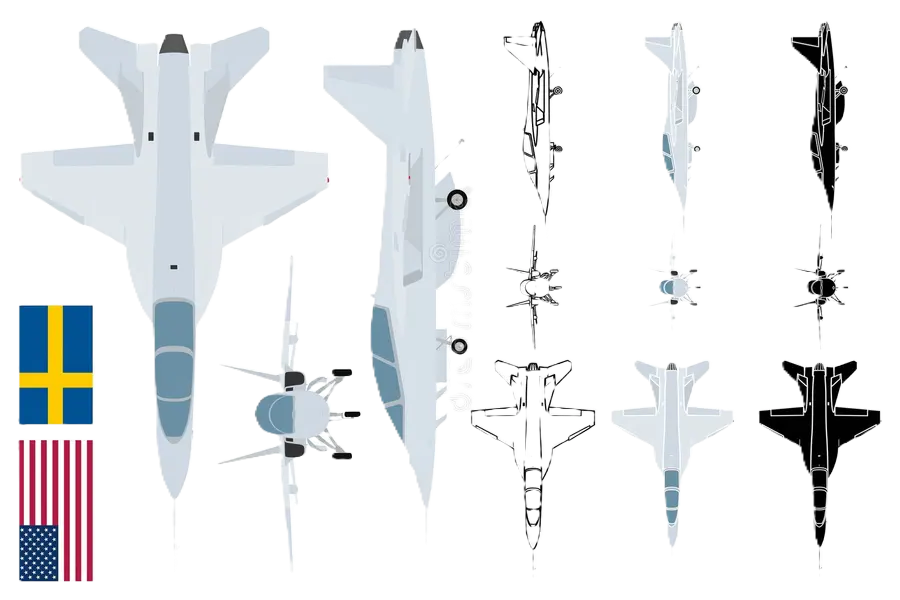
The Boeing–Saab T-7 Red Hawk,[2] initially known as the Boeing T-X (later Boeing–Saab T-X),[3][4] is an American–Swedish transonic advanced jet trainer produced by Boeing with Saab. In September 2018, the United States Air Force (USAF) selected it for the T-X program to replace the Northrop T-38 Talon as the service’s advanced jet trainer.
Development
The USAF’s Air Education and Training Command (AETC) began developing the requirements for a replacement for the supersonic Northrop T-38 Talon as early as 2003. Originally, the replacement trainer was expected to enter service around 2020. A fatigue failure of a T-38C killed its two-person crew in 2008, and the USAF advanced the target date of initial operational capability (IOC) to 2017.[5]
In the fiscal 2013 budget proposal, the USAF suggested delaying the initial operating capability to FY2020 with the contract award not expected before FY2016.[6] Shrinking budgets and higher-priority modernization projects pushed the IOC of the T-X program winner to “fiscal year 2023 or 2024”. Although the program was left out of the FY 2014 budget entirely, the service still viewed the trainer as a priority.[7]

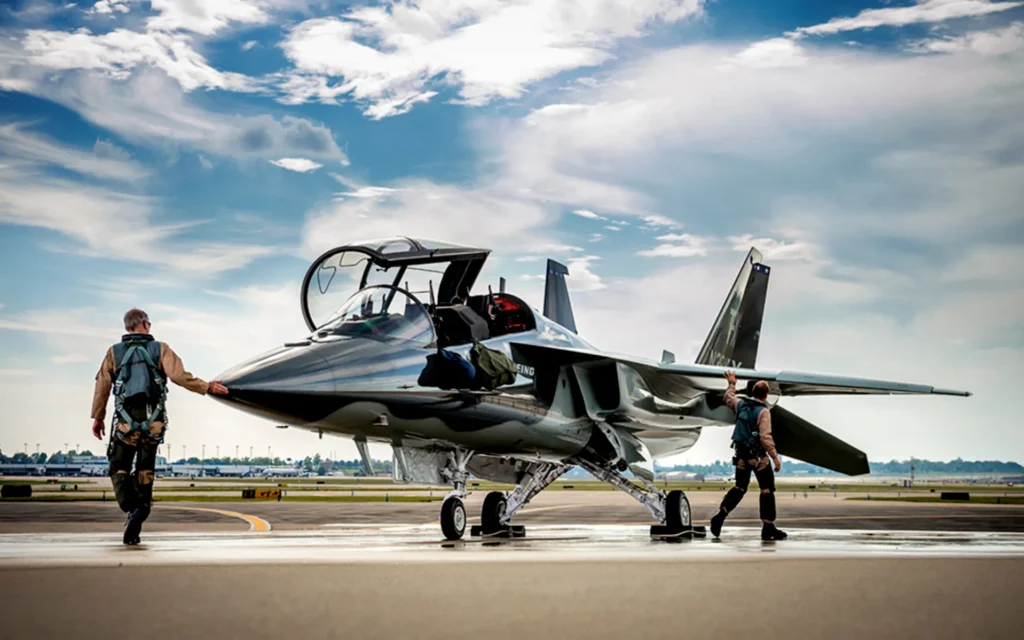
Boeing teamed up with Swedish aerospace firm Saab to compete for the T-7 program. On 13 September 2016,[8] the team unveiled prototypes of the Boeing T-X, a single-engine advanced jet trainer with a twin tail, tandem seating, and retractable tricycle landing gear, powered with a General Electric F404 afterburning turbofan engine.[9][10] The first T-X aircraft flew on 20 December 2016.[11][12] The Boeing–Saab team submitted their entry after the Air Force opened the T-7 program to bids in December 2016.[13]
In September 2018, Air Force officials announced that Boeing’s design would be its new advanced jet trainer, under a program costing up to US$9.2 billion (~$11.3 billion in 2024) that would purchase 351 aircraft, 46 simulators, maintenance training and support. This contract has options for up to 475 airplanes in total.[14][15][16][17] In 2018, Boeing recorded a $691-million (~$848 million in 2024) pre-tax charge during the third quarter, in part because of the T-X program.[18]

In May 2019, Saab announced that it would open a U.S. manufacturing facility for the T-X in Indiana in the Purdue University-affiliated Discovery Park District in West Lafayette, Indiana.[19][20]
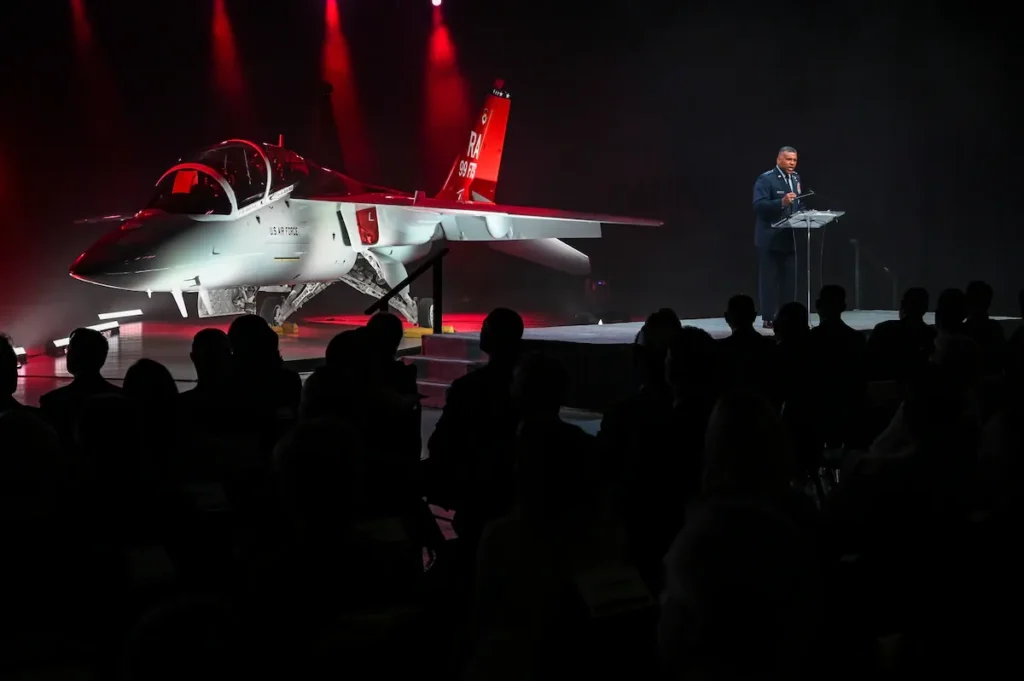
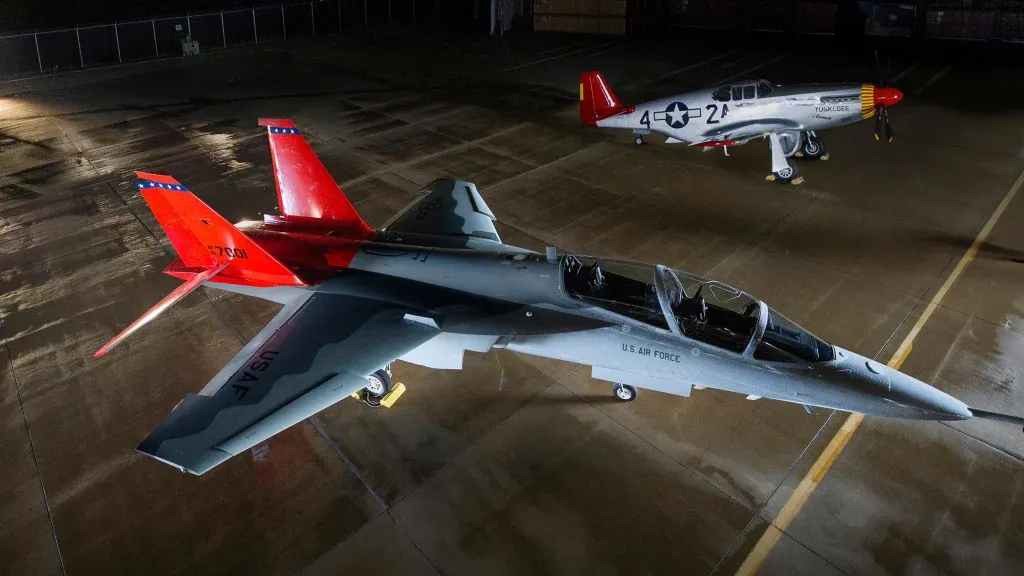
In September 2019, the USAF named the aircraft the “T-7A Red Hawk” as a tribute to the Tuskegee Airmen, who painted their airplanes’ tails bright red, and to the Curtiss P-40 Warhawk, the first aircraft flown in combat by the 99th Fighter Squadron, the U.S. Army Air Force’s first black fighter squadron