History
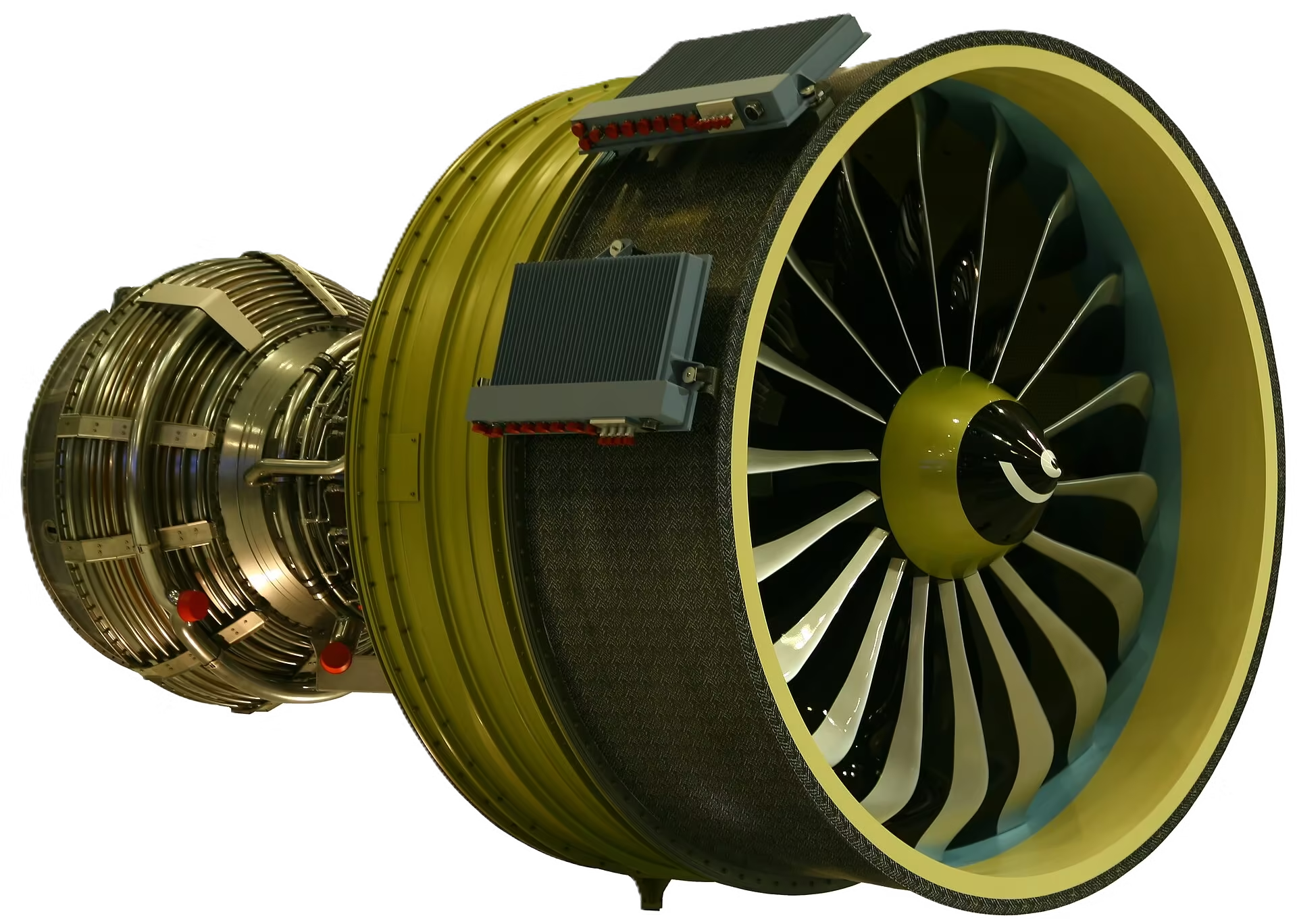
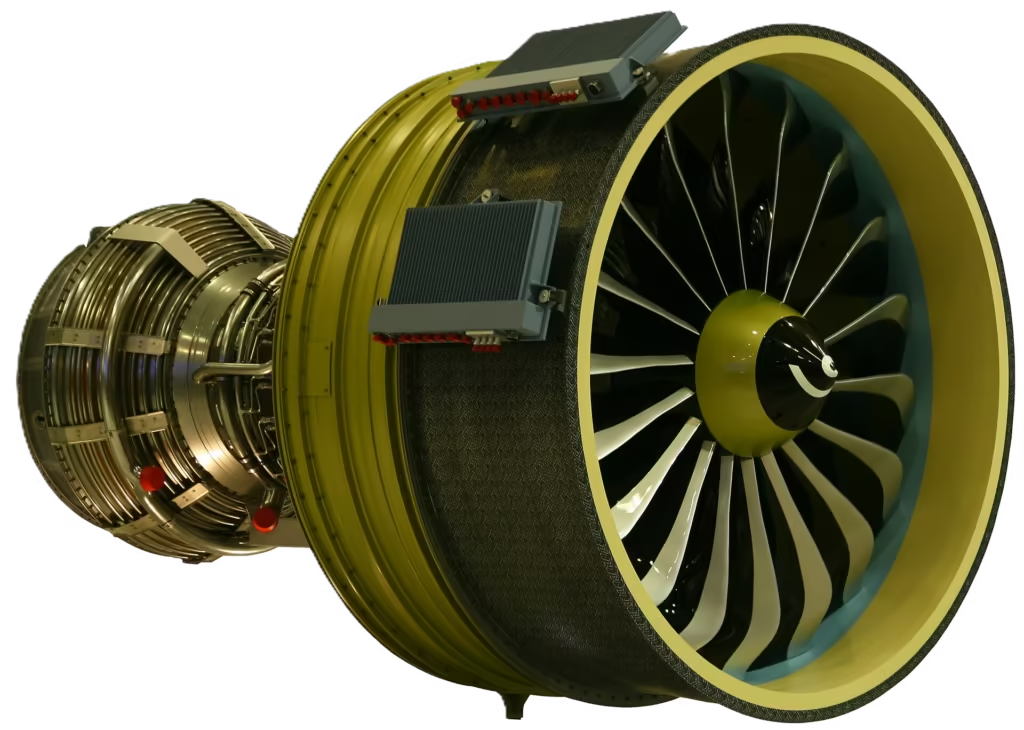
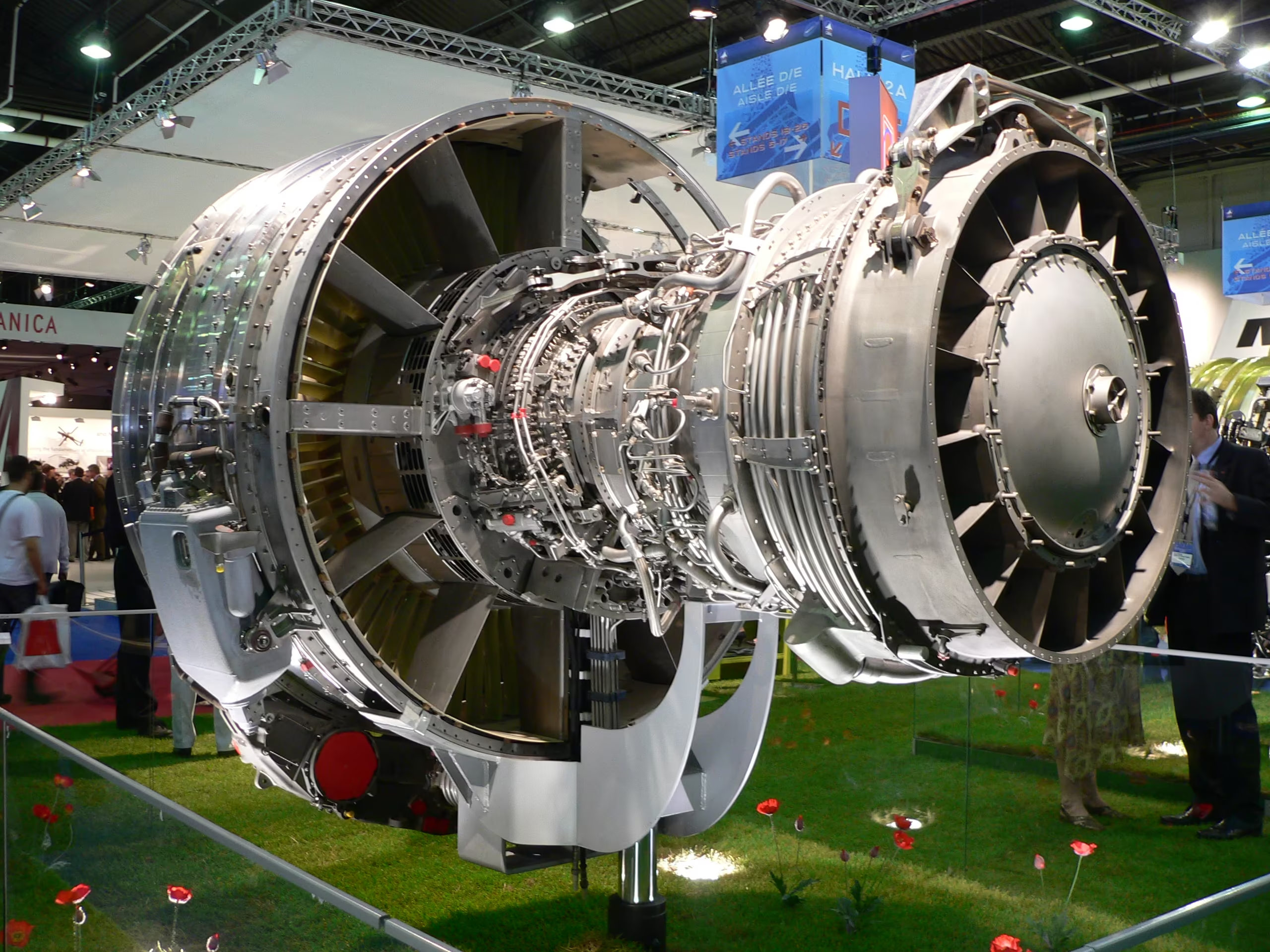
The CFM International LEAP (“Leading Edge Aviation Propulsion”) is a high-bypass turbofan engine produced by CFM International, a 50–50 joint venture between the American GE Aerospace and the French Safran Aircraft Engines. It competes with the Pratt & Whitney PW1000G for narrow-body aircraft.
Design
The LEAP uses 15% less fuel and produces 15% less CO₂ compared to the CFM56. It uses a scaled-down version of the low-pressure turbine used on the General Electric GEnx engine. The fan blades are made of composite materials using a resin transfer molding process and untwist under aerodynamic and centrifugal loads to maintain aerodynamic efficiency.
Although designed with a higher overall pressure ratio than the CFM56, the engine operating limit is lower to improve durability and service life.[7] It uses a higher proportion of composite materials, features the second-generation Twin Annular Pre-mixing Swirler (TAPS II) combustor, and has a bypass ratio of approximately 10:1 to 11:1. The high-pressure compressor has a pressure ratio of 22:1, approximately double that of the CFM56. The turbine shrouds, made from ceramic matrix composites (CMCs), are lighter than those on the CFM56.
The LEAP incorporates an eductor-based oil cooling system, derived from the GEnx design. This system includes oil coolers mounted on the fan duct and uses a venturi effect to maintain oil pressure within the internal sump.Additionally, the LEAP includes some of the first FAA-certified 3D-printed components used in a commercial jet engine.