History
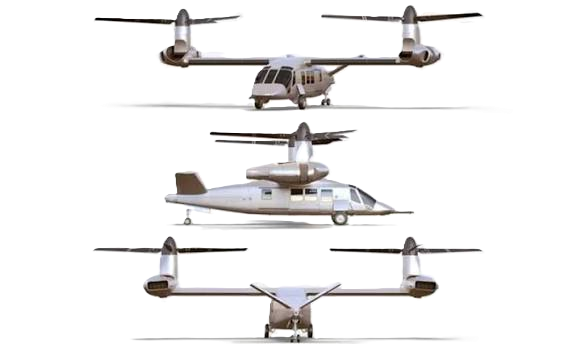
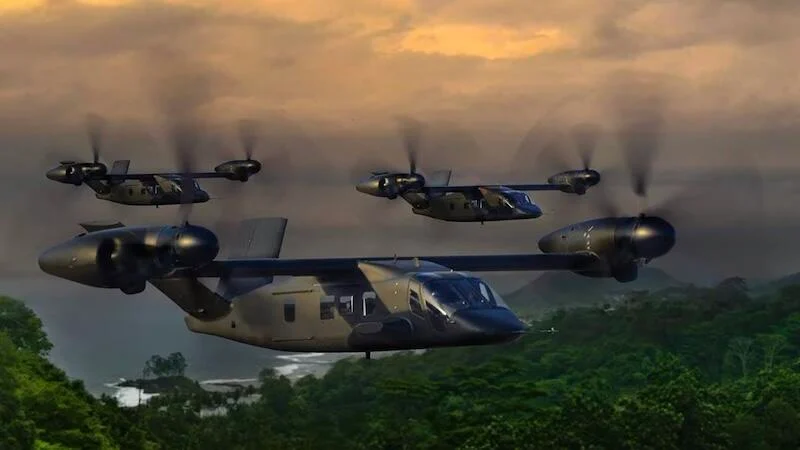
The Bell MV-75 Cheyenne II is a tiltrotor aircraft being developed by Bell for the United States Army‘s Future Vertical Lift (FVL) program.
It originated from the Bell V-280 Valor technology demonstrator, whose design was unveiled in 2013 and which took its first flight on 18 December 2017. In 2022, the V-280 was chosen by the US Army as the winner of the Future Long-Range Assault Aircraft program to replace the Sikorsky UH-60 Black Hawk.
As of April 2024, limited user tests are planned for 2027 and 2028. The aircraft is expected to deploy in 2031.
Development
Bell Helicopter unveiled the V-280 Valor design at the 2013 Army Aviation Association of America’s (AAAA) Annual Professional Forum and Exposition in Fort Worth, Texas. That June, the company announced that the design had been selected by the US Army for the Joint Multi-Role (JMR) Technology Demonstrator (TD) phase, the technology demonstration precursor to Future Vertical Lift (FVL). The Army classified the offering as a Category I proposal: a well-conceived, scientifically or technically sound proposal pertinent to program goals and objectives with applicability to Army mission needs, offered by a responsible contractor with the competent scientific and technical staff supporting resources required to achieve results.JMR-TD contracts were expected to be awarded in September 2013, with flights scheduled for 2017.
In September 2013, Bell announced it would partner with Lockheed Martin to develop the V-280. Lockheed will provide integrated avionics, sensors, and weapons to the aircraft. Additional partners were announced in the following months,including Moog Inc. for the flight control systems, GE Aviation for the engines, GKN for the tail structure, Spirit AeroSystems for the composite fuselage, Eaton Corporation as the distributor of hydraulics and power generation systems,[ and Astronics Advanced Electric Systems to design and manufacture power distribution systems. Israel Aerospace Industries, the first international partner recruited for the V-280, will supply the nacelle structures. Textron sister company TRU Simulation & Training will build a high-fidelity marketing simulator and desktop maintenance trainer.
In October 2013, the U.S. Army awarded a technology investment agreement (TIA) to Bell for the V-280 Valor tiltrotor under the Joint Multi-Role program. Awards were also given to AVX Aircraft, Karem Aircraft, and a Sikorsky-Boeing team. The JMR program is not intended to develop a prototype for the next family of vehicles, but to develop technologies and interfaces. The TIAs give the four teams nine months to complete preliminary design of their rotorcraft, which the Army will then review and authorize the construction of two competing demonstrators to fly in 2017. Each of the four teams received $6.5 million from the Army for phase I of the program, although Bell is investing an undisclosed amount of its own money. On 21 October 2013, Bell unveiled the first full-scale mock-up of the V-280 Valor at Association of the United States Army 2013